


What Is Loose Leaf Tea and Why Does It Brew Differently Than Bags
Loose leaf tea and bagged tea come from the same plant. What separates them is everything that happens after the leaf is picked — and those differences show up clearly in the cup.
Quick Answer: Loose leaf tea refers to whole or large-cut tea leaves brewed directly in an infuser or teapot, without a bag. Tea bags typically contain dust and fannings — small, broken particles left over from tea processing. Because loose leaf uses more intact leaves, essential oils stay preserved, flavor compounds develop more fully during steeping, and the result is a noticeably more complex cup. The physical structure of the leaf is the core reason they brew differently.
What Is Loose Leaf Tea, Exactly
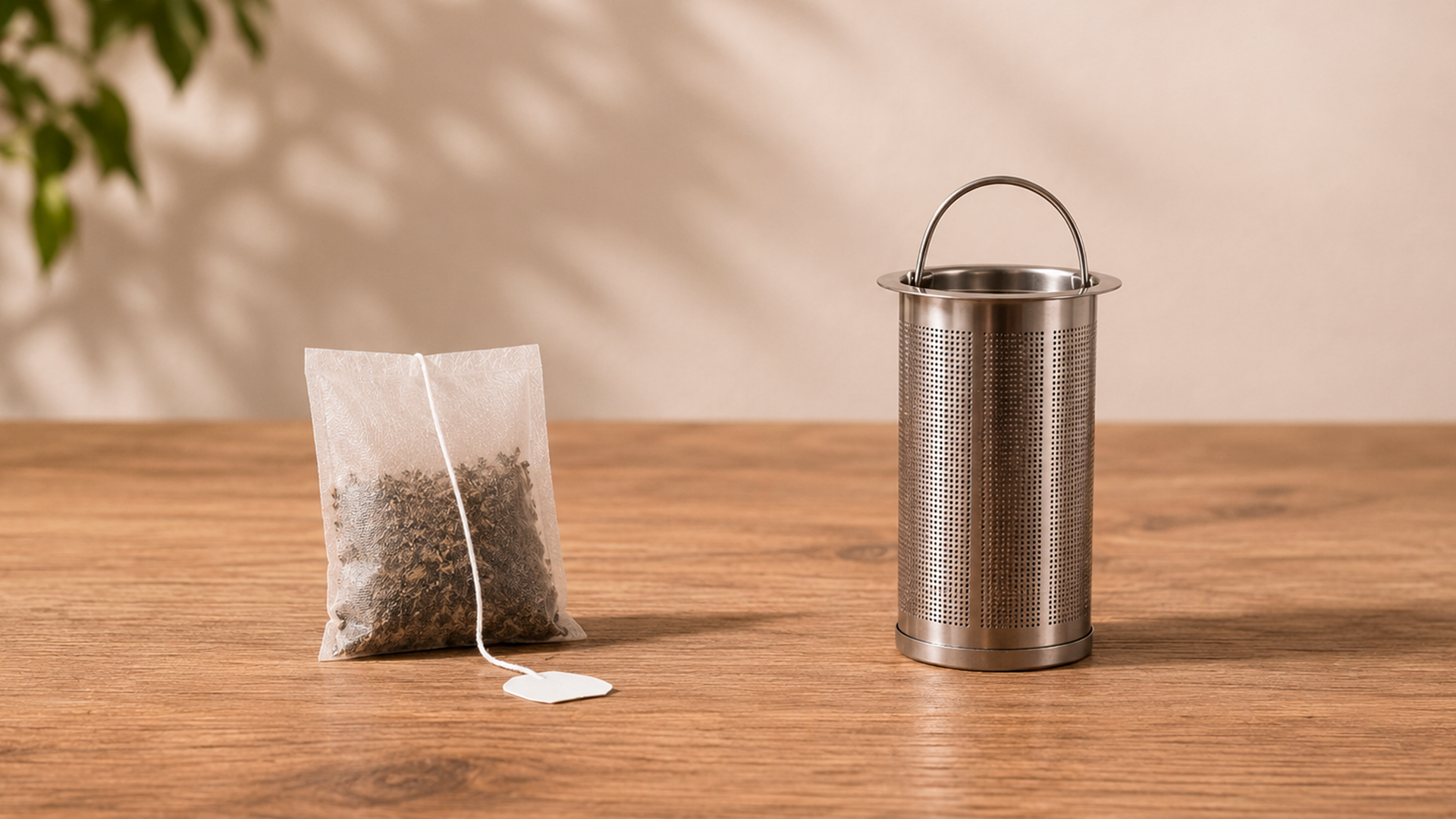
Loose leaf tea is simply tea that hasn't been pre-packaged into a bag. The leaves — whether whole, twisted, rolled, or cut into larger pieces — go directly into an infuser or teapot for brewing. You measure the amount you want, steep it, and remove the leaves when the time is up.
It's the original format. Tea bags are a 20th-century invention designed for speed and convenience. Before them, all tea was loose leaf.
The term "loose leaf" doesn't refer to a specific type of tea. Black, green, white, oolong, and herbal blends all exist in loose leaf form. It describes how the tea is prepared and sold, not what's in it.
What's Actually Inside a Tea Bag
Most tea bags — especially standard flat ones — contain what the industry calls dust and fannings. These are the smallest particles produced during tea processing: the fragments and powder left over after whole leaves are handled, sorted, and cut.
Dust and fannings aren't a different variety of tea. They're the lowest-grade remnants of the same leaves. They're used in bags because their small particle size creates high surface area, which means fast extraction — ideal for a product designed to brew in 2 minutes with boiling water.
The tradeoff is flavor ceiling. Small particles extract quickly, but they also exhaust quickly. The top notes that define a tea's character — the aromatics, the brightness, the complexity — are tied to volatile compounds in the leaf's essential oils. When the leaf is broken down into dust, those compounds are already partially lost before brewing even begins.
Premium pyramid bags sometimes use larger leaf cuts, which is an improvement. But the bag itself introduces a separate issue.
Why the Bag Itself Is a Problem
Most conventional tea bags — particularly the pyramid and silken styles — are made from plastic-based materials: nylon, PET, or polypropylene. When steeped in hot water, these materials shed microplastic particles directly into the cup.
A 2019 study from McGill University found that a single plastic tea bag releases approximately 11.6 billion microplastics and 3.1 billion nanoplastics per cup at brewing temperature. This isn't a manufacturing defect. It's what plastic does when it meets heat.
Standard flat paper bags often contain a plastic sealant in the seams even when the body is paper.
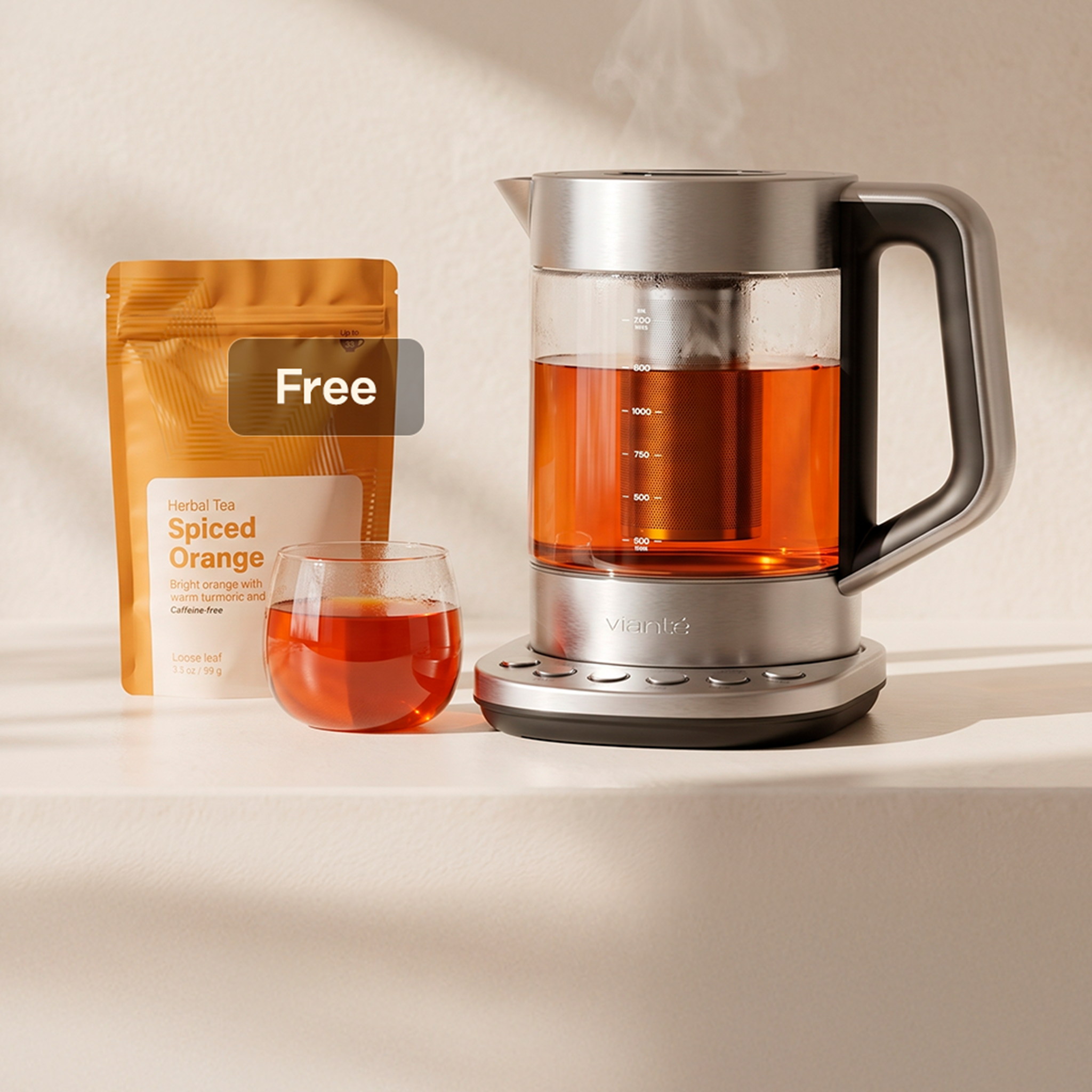
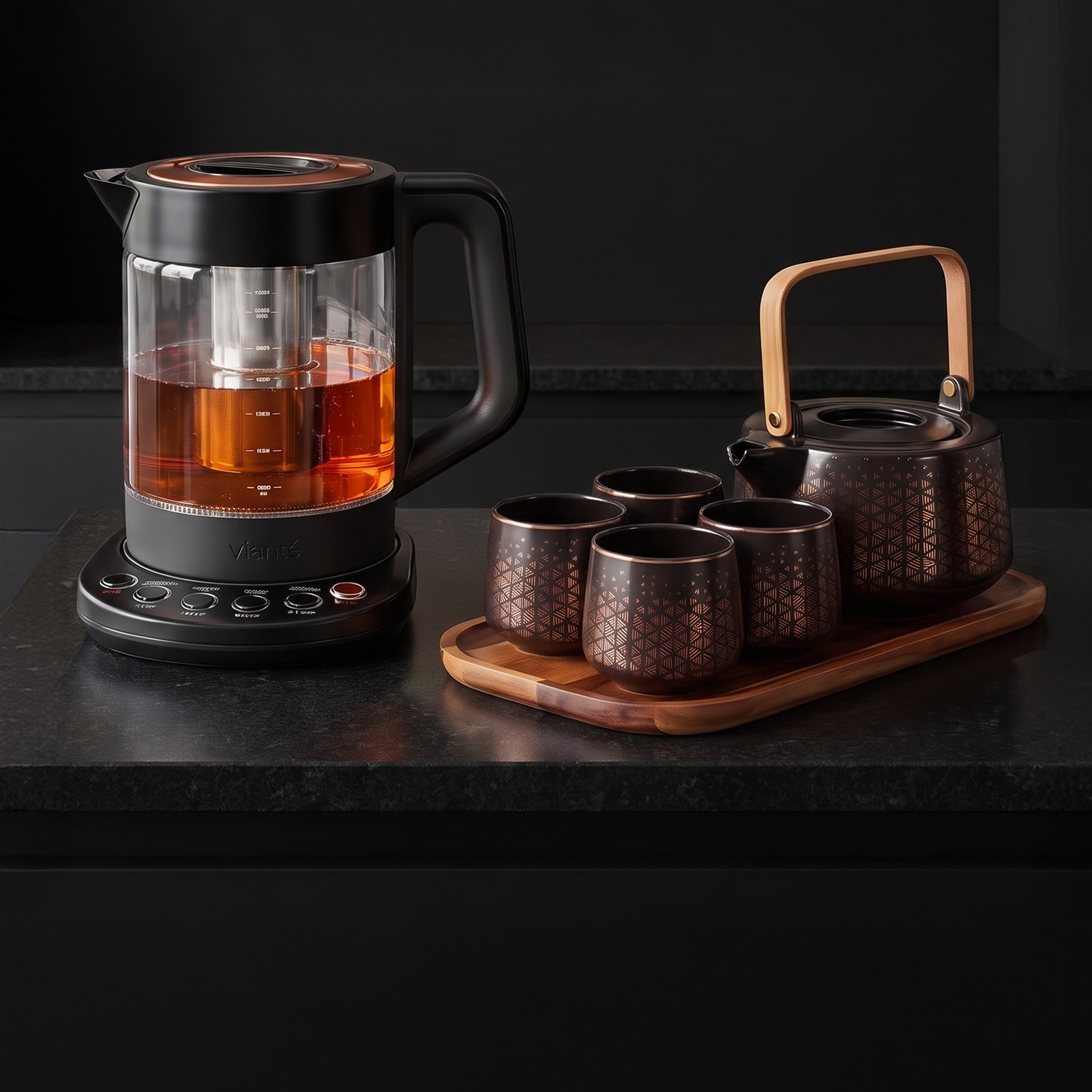
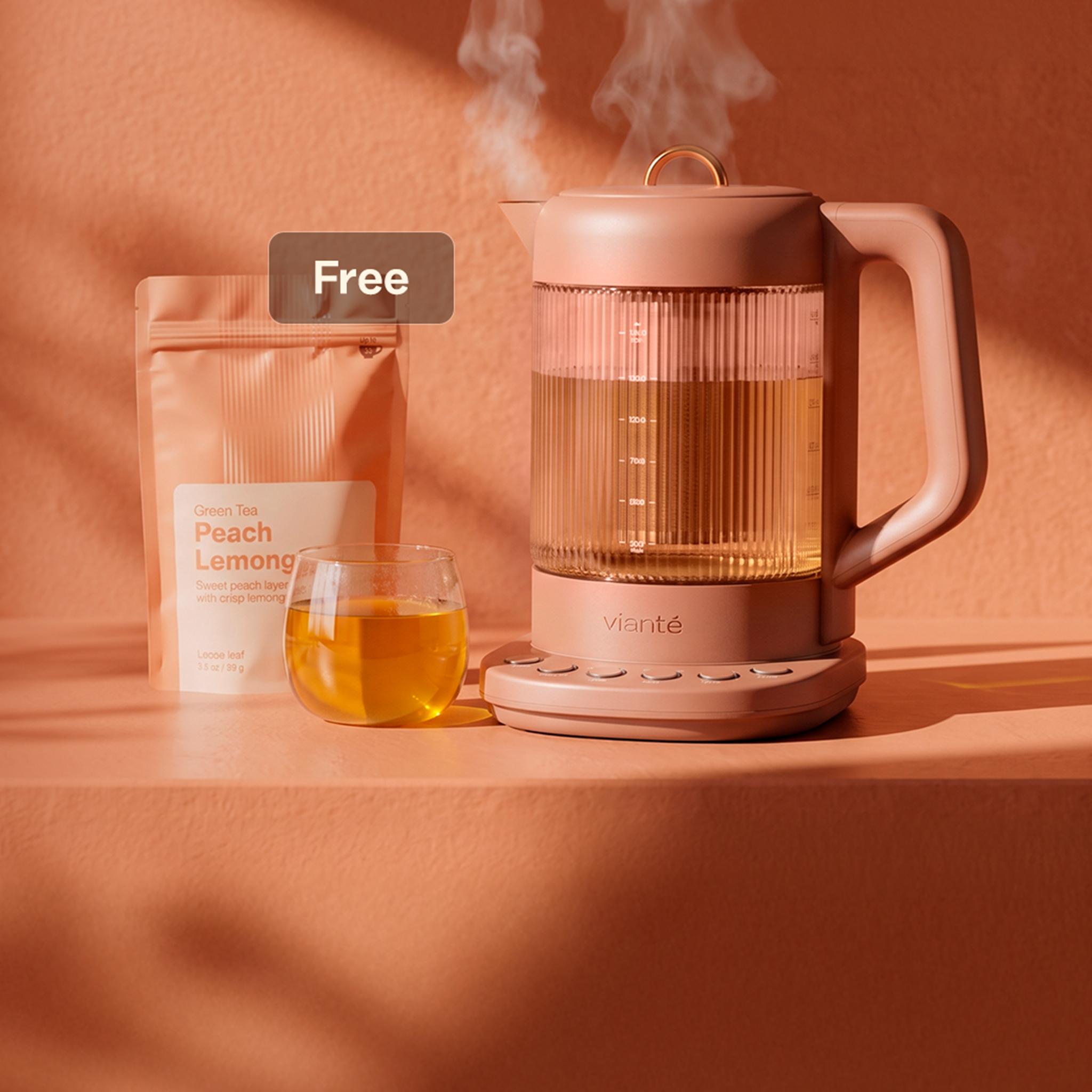
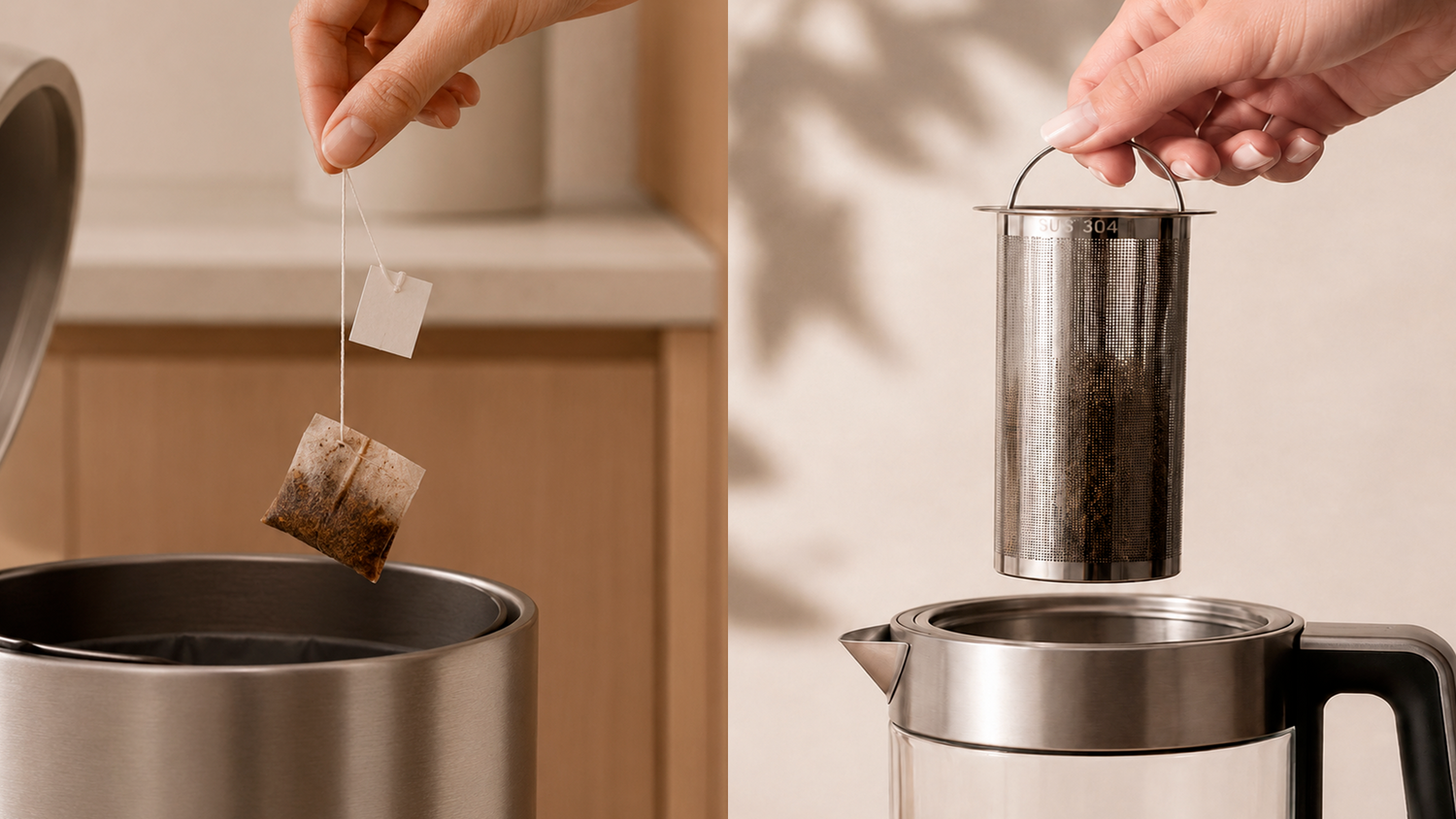
Loose leaf tea brewed in a stainless steel mesh infuser, glass teapot, or ceramic vessel doesn't have this problem. There's no plastic in contact with the hot water at any point.
How Loose Leaf Brews Differently
The physical structure of a whole or large-cut leaf matters during steeping.
When hot water enters a loose leaf infuser, the leaves absorb water and expand — a process sometimes called "the agony of the leaves." As the leaf opens, it releases flavor compounds in layers. Lighter, more volatile aromatics come first. Body and depth follow. The extraction is gradual and multidimensional.
With dust or fannings, extraction is fast and flat. Everything releases at once, and the curve from "not ready" to "over-steeped" is steep and short.
This is why loose leaf is more forgiving to brew — the window between under and over-extracted is wider — and why the same variety of tea tastes demonstrably different in the two formats.
What You Need to Brew Loose Leaf
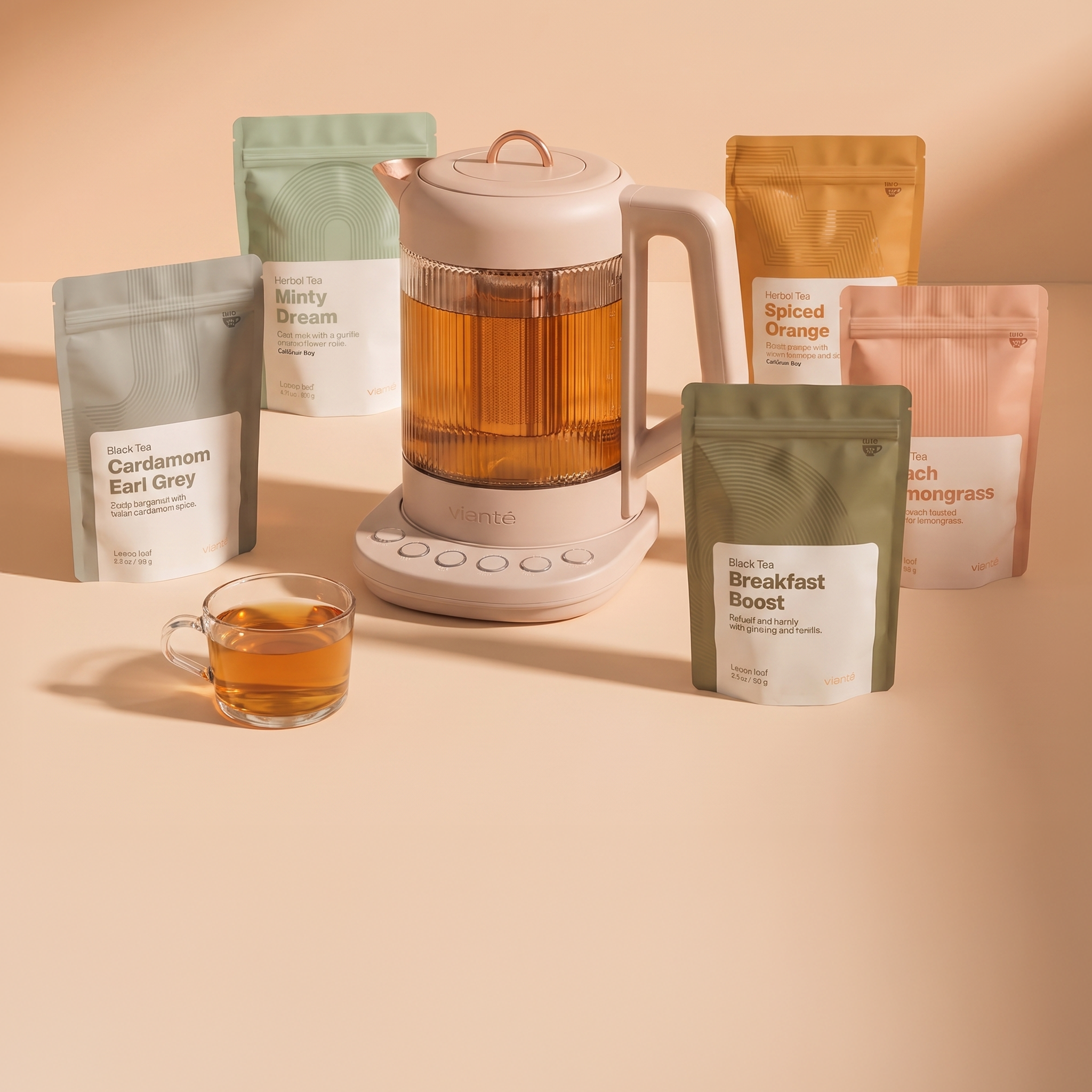
A kettle (you likely have one), a stainless steel mesh infuser or teapot with a built-in strainer, and the tea itself. That's the full setup.
Vianté's loose leaf collection (https://www.viante.com/collections/tea-blends) is designed to be brewed this way — and Vianté kettles (https://www.viante.com/collections/digital-kettles) are built with zero plastic-to-water contact, so the water that reaches your leaves is clean from start to finish.
People Also Ask
Is loose leaf tea the same as regular tea?
Loose leaf tea is tea in its original, unpackaged form — whole or large-cut leaves brewed directly in an infuser. "Regular tea" usually refers to bagged tea, which typically uses lower-grade, broken-down leaf particles. They both come from the same plant; the difference is in leaf quality and preparation format.
Does loose leaf tea taste better than tea bags?
For most teas, yes — noticeably. The intact leaf structure preserves essential oils and flavor compounds that break down when leaves are processed into dust and fannings for bags. The same variety will produce a more complex and aromatic cup in loose leaf form.
Is loose leaf tea harder to make than tea bags?
The only additional step is measuring loose leaf into an infuser instead of dropping a bag in a cup. The steep time is the same. Total preparation difference: about 30 seconds.
Can you reuse loose leaf tea?
Yes. High-quality loose leaf holds up to multiple steeps — typically two to four, depending on the type. Add 30–60 seconds per subsequent steep. Tea bags don't re-steep meaningfully.
Where does loose leaf tea come from?
Loose leaf tea comes from Camellia sinensis, the same plant as all true teas. Major producing regions include China, Japan, India (Darjeeling, Assam), Sri Lanka (Ceylon), and Taiwan. The origin affects flavor significantly — climate, altitude, and processing methods all shape the character of the leaf.

Leave a comment
This site is protected by hCaptcha and the hCaptcha Privacy Policy and Terms of Service apply.