

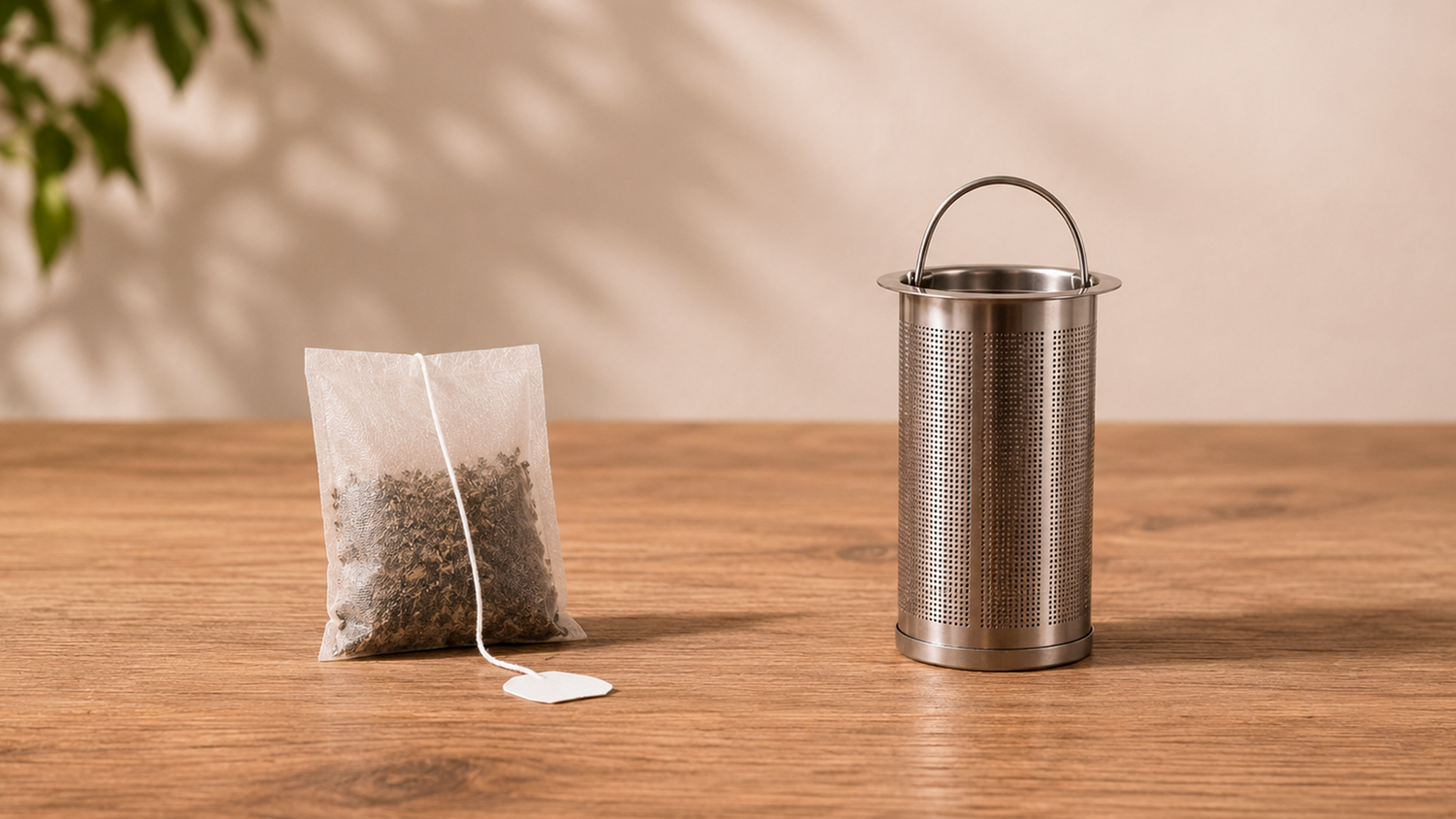
Every cup of tea starts with a simple question: what's actually in the water?
For most people drinking bagged tea, the answer is more complicated than expected.
Quick Answer: Loose leaf tea does not introduce microplastics into your cup the way tea bags do. Most conventional tea bags — especially pyramid-style and silk bags — are made from plastic-based materials that release billions of microplastic and nanoplastic particles directly into the water when steeped at brewing temperature. Loose leaf tea brewed in a glass, ceramic, or stainless steel infuser bypasses this entirely.
Where Do Microplastics in Tea Come From?
They don't come from the tea itself. They come from the bag.
Most modern tea bags aren't made from plain paper. Pyramid-style and "silken" bags — the premium-looking ones — are typically made from nylon, PET, or polypropylene. Even standard flat bags often use a plastic sealant to hold the seams together. When those materials hit boiling water, they break down and shed particles.
A landmark 2019 study from McGill University found that steeping a single plastic tea bag at brewing temperature releases approximately 11.6 billion microplastics and 3.1 billion nanoplastics into a single cup. That's not a manufacturing defect. That's just what plastic does when it meets heat.
Does Loose Leaf Tea Release Microplastics?
No — not through the brewing process itself.
When you steep loose leaf tea in a glass, ceramic, or stainless steel infuser, there's no plastic material in contact with the hot water. The tea releases its flavor, color, and everything it naturally contains. That's it.
The microplastic issue in tea bags is a materials problem, not a tea problem. Remove the plastic bag from the equation and you remove the source.
How Many Microplastics Are Actually in a Tea Bag?
More than most people would guess — and it varies by material.
A December 2024 study from the Autonomous University of Barcelona tested bags made from nylon-6, polypropylene, and cellulose. Polypropylene bags released approximately 1.2 billion particles per milliliter. Cellulose bags released around 135 million. Even nylon-6 — the lowest of the three — released 8.18 million particles per milliliter. The study also found that these particles can be absorbed by human intestinal cells.
Even at the lower end of that range, we're talking about tens of millions of particles per milliliter in something people drink every single day.
What About Paper Tea Bags — Are Those Safe?
Not always. Paper sounds inert, but most paper tea bags include a plastic sealant or heat-bonding agent to keep the bag closed during steeping. If a brand doesn't explicitly state their bags are 100% plastic-free and verified, the safe assumption is that plastic is involved somewhere.
What's the Cleanest Way to Brew Tea?
The material of your infuser matters as much as the material of the bag.
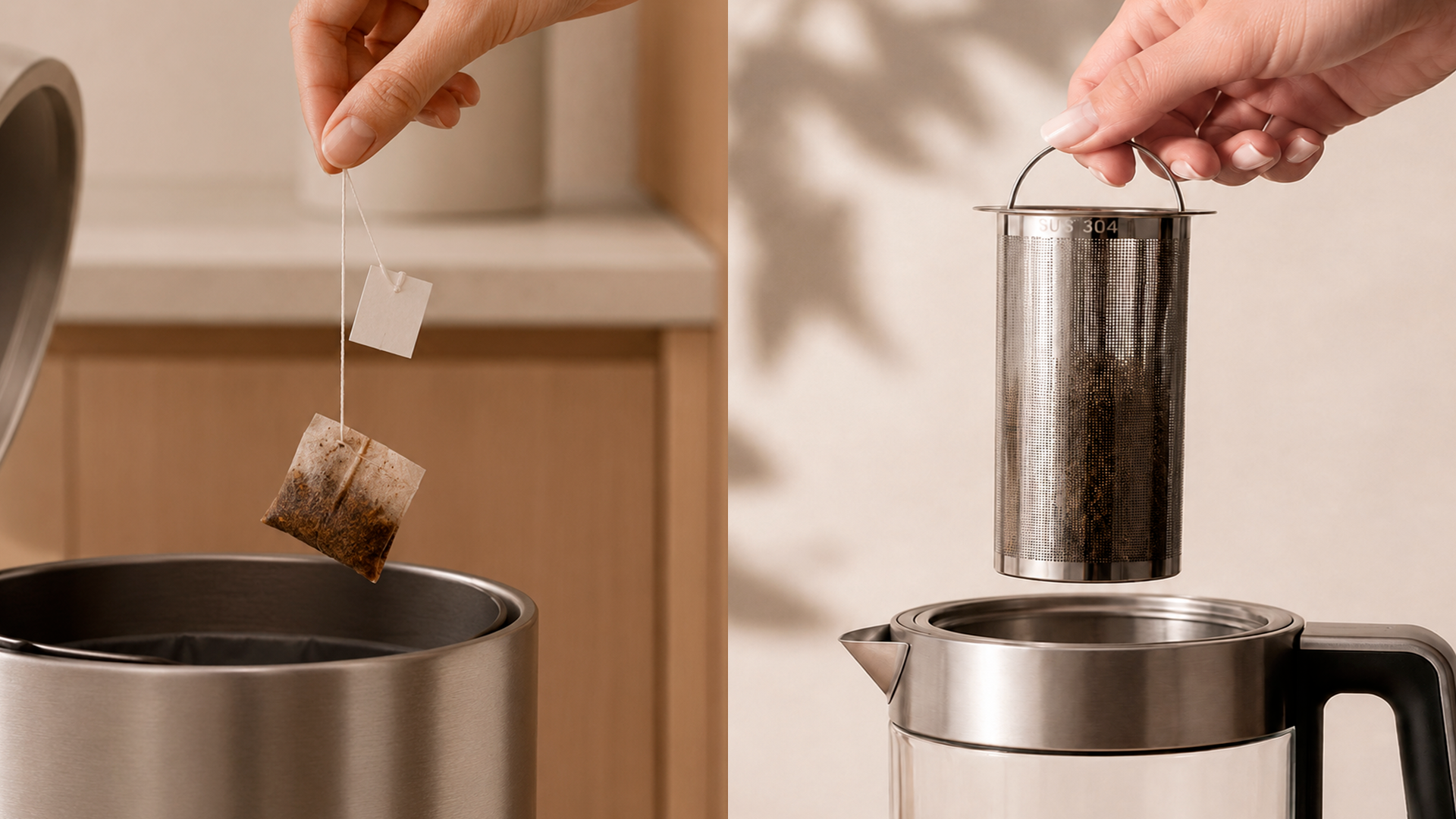
The safest setup: loose leaf tea steeped in a stainless steel mesh infuser, glass teapot, or ceramic vessel. No plastic touches the hot water at any point in the process.
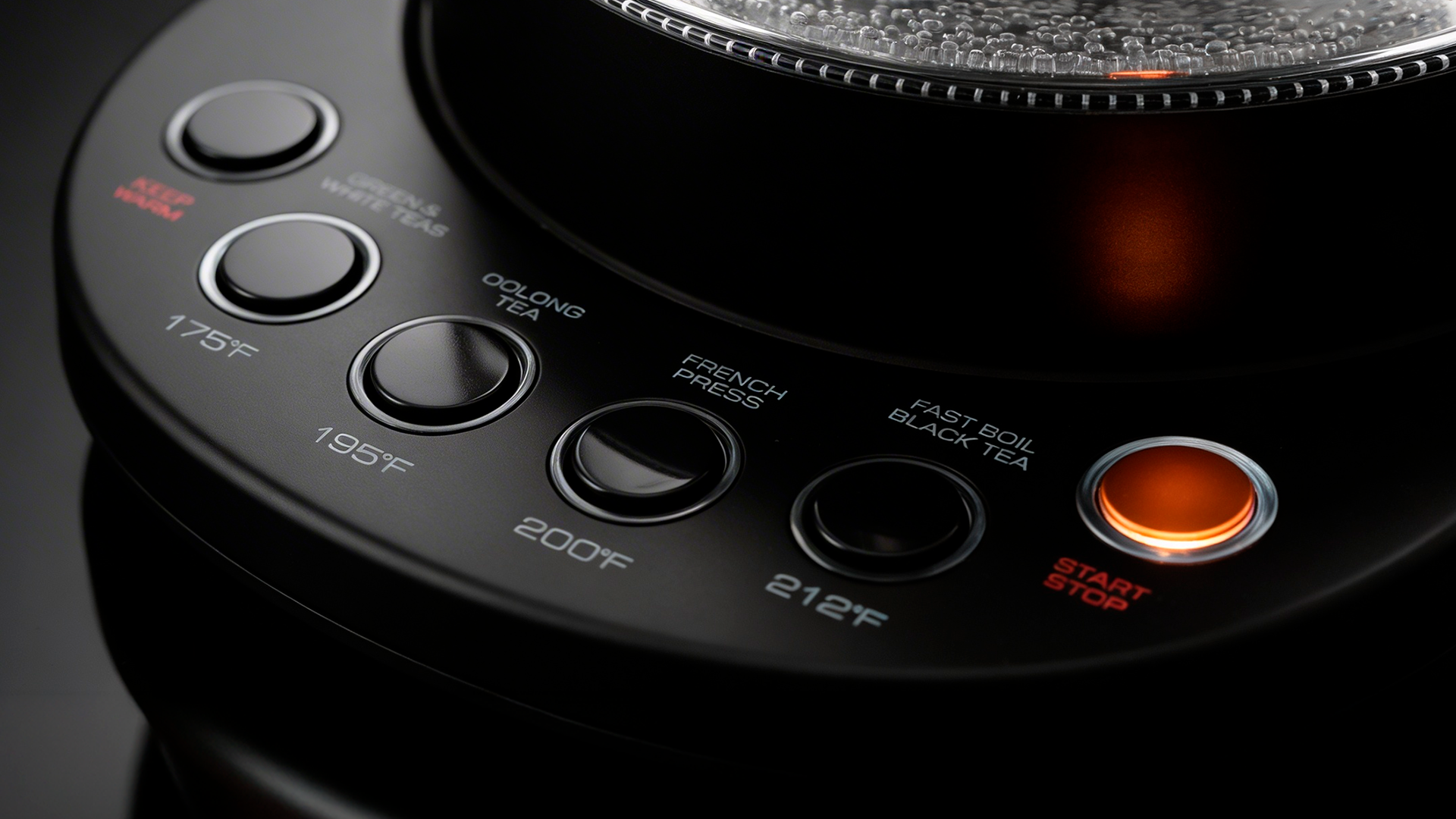
That's the standard Vianté is built around — loose leaf, no bags, and kettles with zero plastic-to-water contact from boil to pour.
Does Loose Leaf Tea Taste Different?
Yes — and the reason is structural, not just preference.
Bagged tea typically uses lower-grade leaf material: dust and fannings, which are small broken particles left over from processing. They brew fast and strong, but the flavor ceiling is low. Loose leaf uses whole or larger cut leaves. The essential oils stay intact, the flavor compounds develop fully during steeping, and the result is noticeably more nuanced. It's not a matter of taste preference — it's the difference between a whole ingredient and a processed fragment of one.
People Also Ask
Are microplastics in tea dangerous? Research is still ongoing, but studies have found that microplastic particles from tea bags can be absorbed by human intestinal cells. Scientists are actively studying the long-term implications of repeated exposure. Choosing loose leaf tea brewed in a plastic-free infuser is the most direct way to eliminate this source.
Do all tea bags contain plastic? Most do, to varying degrees. Pyramid and silken bags are typically made from nylon or PET. Flat paper bags usually contain a plastic sealant in the seams. Some brands now offer fully plastic-free bags — but these are the exception, not the rule.
Is loose leaf tea better than tea bags for health? From a materials standpoint, loose leaf tea brewed in a non-plastic infuser avoids the microplastic issue entirely. Removing plastic from your brewing setup is a meaningful and straightforward difference.
Can you make loose leaf tea without a tea strainer? Yes. A French press, a teapot with a built-in ceramic or stainless steel infuser, or a wide-mouth pitcher with a pour strainer all work. The key is keeping plastic out of the hot water.
Does Vianté tea come in bags? No. Vianté tea is loose leaf — designed to be brewed in a way that keeps your water completely free from plastic contact throughout the entire process.

Leave a comment
This site is protected by hCaptcha and the hCaptcha Privacy Policy and Terms of Service apply.