


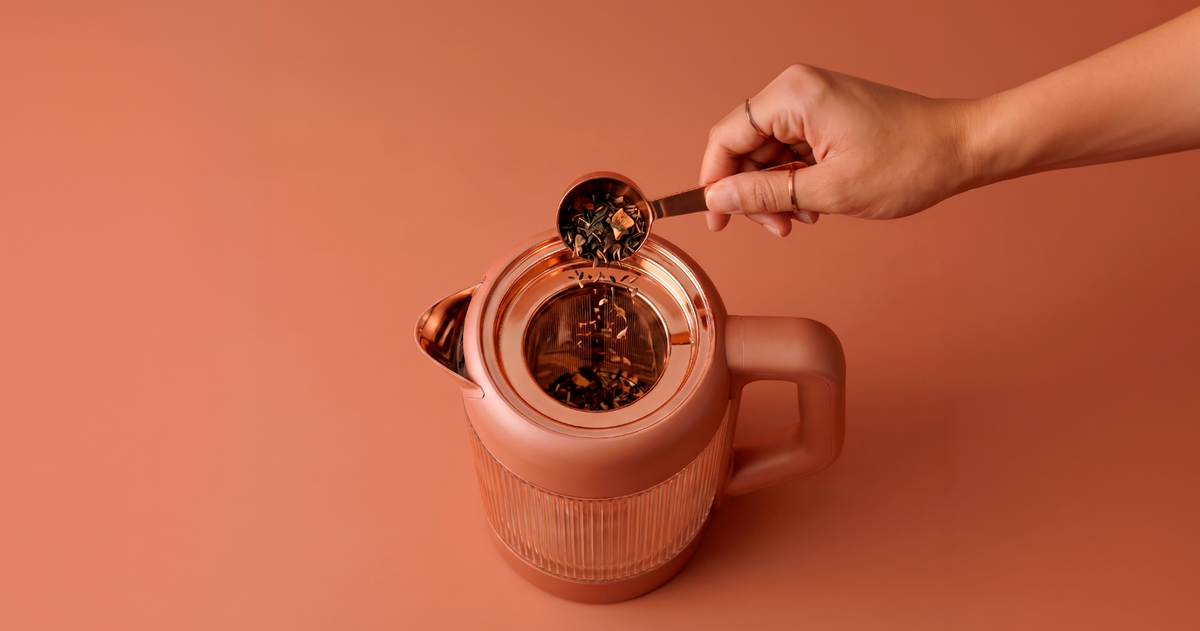
Bitter tea usually means the leaves extracted more than you wanted. Temperature, time, dose, and water all contribute. Work through these seven checks before deciding the tea itself is the problem.
Check temperature and time first
1. Let boiling water cool before pouring it over delicate green tea. 2. Set a timer and remove the leaves when steeping is done. 3. Do not leave an infuser in the mug while you drink. Hot water continues to extract flavor even after the cup looks ready.
Then check the recipe
4. Measure leaf for your cup size rather than guessing. 5. Give whole leaves space to open in the infuser. 6. If you want a stronger cup, add leaf before adding extra minutes. Strong and bitter are different results.
Finally, taste the water
7. Brew once with fresh, pleasant-tasting water. If bitterness remains, try a slightly lower temperature or a shorter steep, changing one factor at a time. Black teas can also taste astringent when heavily steeped; milk may soften the perception, but it will not undo over-extraction.
What bitter and astringent mean
Bitterness is a taste; astringency is the drying or puckering sensation in your mouth. A black tea can feel brisk without being unpleasant, but a long or very hot steep can push both qualities too far. Taste a small sip immediately after removing the leaves and another once the cup cools slightly. If the harshness grows as the tea cools, try changing the recipe before adding sugar. Water with a strong chemical taste can also interfere, so sample it before brewing. A clean kettle and infuser help you isolate the cause.
A two-cup diagnostic
Make two cups from the same tea and water. Brew the first according to the package and the second at a slightly lower temperature or shorter time, changing only one variable. Compare the aroma, body, and aftertaste. If the second cup is smoother but too light, restore the original time and add a little more leaf instead. This is more informative than changing the tea, kettle, sweetener, and steep time all at once. Keep the successful version in a note on your phone; the right recipe for your mug may be a little different from a small tasting cup.
A bitter cup can still teach you something
If the first cup is unpleasant, do not immediately throw out the package. Record whether the bitterness was present at the first sip or developed while the infuser sat in the cup. A tea that starts smooth and becomes harsh suggests the leaves kept steeping. A cup that is harsh from the beginning points you toward temperature, time, dose, or the water itself. On the next brew, make one small change and compare. For a green tea, a cooler brew is a sensible test; for black tea, removing the leaves sooner may be enough.
Frequently asked questions
Can you fix bitter tea after brewing?
Diluting it with hot water or serving it over ice may soften the taste; adjust your method for the next cup.
Does more tea make it bitter?
A larger dose can make the cup stronger, but bitterness often comes from excessive time or heat. Adjust only one variable and taste the result.
Explore related teas and tools
For a practical next step, Compare Vianté electric tea kettles. Pair the method with the instructions on the current product packaging.
For a related brewing question, read What Temperature Should Water Be for Tea?.
END ARTICLE BODY
04 | How to Store Loose Leaf Tea So It Stays Fresh
Scheduled Friday: 2026-10-23
SHOPIFY FIELDS — do not paste into article body
Article title / H1: How to Store Loose Leaf Tea So It Stays Fresh
SEO page title: How to Store Loose Leaf Tea | Vianté
Meta description: Keep loose leaf tea aromatic with simple storage habits. Compare resealable pouches and tins, and avoid moisture, sunlight, heat, and kitchen odors.
URL handle: how-to-store-loose-leaf-tea-so-it-stays-fresh (final path /blogs/news/how-to-store-loose-leaf-tea-so-it-stays-fresh)
Primary search intent: how to store loose leaf tea so it stays fresh
Related phrases to use naturally: best way to store loose leaf tea; tea storage
Excerpt: Keep loose leaf tea aromatic with simple storage habits. Compare resealable pouches and tins, and avoid moisture, s.
Featured image brief: Sealed tea pouch and opaque tin in a dry cabinet.
Suggested image alt text: Sealed tea pouch and opaque tin in a dry cabinet. Revise after seeing the actual image.
Suggested Shopify tag: Tea brewing
ARTICLE BODY — copy from here
Loose leaf tea stays more aromatic when it is protected from air, light, heat, moisture, and strong odors. A sealed pouch or opaque airtight container in a cool cupboard is a practical setup for most homes.
Choose a dry, sealed spot
Close the original resealable pouch fully after each use, or transfer the leaves to a clean, dry tin. Keep the container away from the stove, sunny windows, and the sink. Never scoop with a damp spoon; moisture can spoil dry ingredients.
Keep aromas separate
Tea absorbs nearby odors. Do not store delicate tea next to coffee, spices, or scented products. Keep strongly aromatic blends sealed separately, even when they share the same cabinet.
Buy an amount you will enjoy
There is no universal freshness deadline for every blend. Packaging, ingredients, and storage all matter. Write the opening date on the pouch and use aroma and the label’s best-by date as guides. If the tea smells stale or shows signs of moisture or mold, discard it.
Choosing a container
An opaque tin with a well-fitting lid is useful if you buy tea in bulk. The original sealed pouch is also fine when it closes reliably and stays out of light. A clear glass jar looks attractive on a counter but exposes the leaves to light unless it lives inside a closed cabinet. Whichever container you choose, make sure it is clean and completely dry. Avoid topping up an old container with a new purchase without checking the older tea first; mixing batches hides how long the oldest leaves have been open.
A simple freshness check
Compare the smell of the dry leaves with the first time you opened the pouch. If the aroma has faded, make a small test cup before changing the brewing recipe. A flat cup may reflect older tea, poor water, or both. Humid kitchens need extra care: close the pouch immediately rather than leaving it open beside a steaming kettle. Do not keep tea above the range or next to the dishwasher, where temperature and moisture change often. Proper storage preserves flavor; it does not turn a stale or contaminated product fresh again.
Organize more than one blend
If you have several open pouches, put the tea name and opening date where you can read them without opening every container. Keep a bold black tea and a strongly scented mint blend separately sealed; a shared drawer is fine if the packaging is reliable. Rotate older pouches to the front and finish those first. Do not store loose leaves in the kettle, infuser, or a damp teapot after brewing. Dry leaf storage and handling used wet leaves are different jobs. A simple organized shelf makes it easier to use what you own before ordering more.
Frequently asked questions
Should loose leaf tea go in the refrigerator?
Usually no. Condensation and food odors can be a problem; a dry cupboard is simpler for everyday storage.
Can tea lose flavor without expiring?
Yes. Aroma can fade after opening, especially when air, heat, moisture, or nearby odors reach the leaves. Check the package date and smell before brewing.
Explore related teas and tools
For a practical next step, Explore Vianté loose leaf tea blends. Pair the method with the instructions on the current product packaging.
For a related brewing question, read What Is Loose Leaf Tea and Why Does It Brew Differently Than Bags?.


Leave a comment
This site is protected by hCaptcha and the hCaptcha Privacy Policy and Terms of Service apply.