

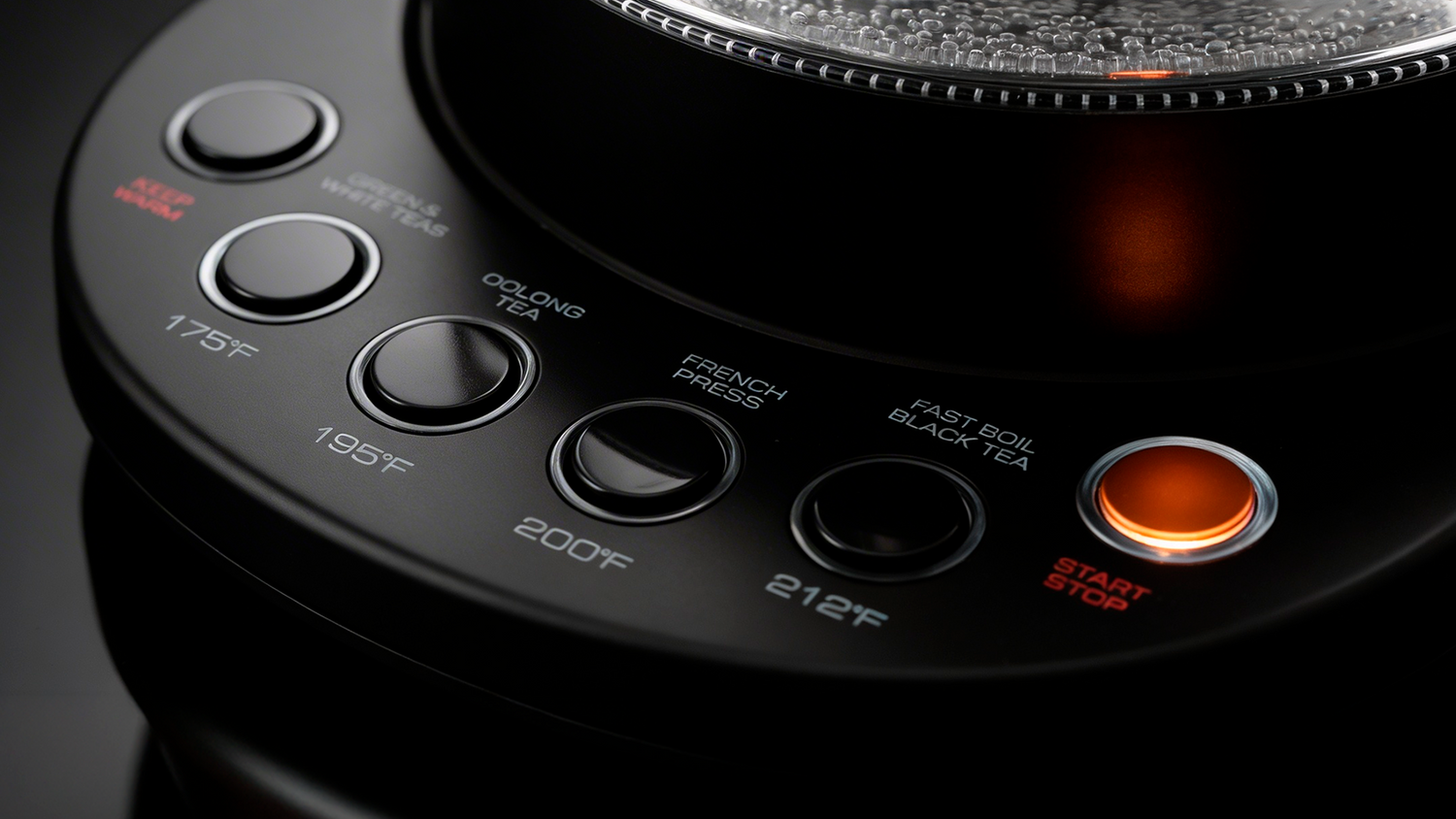
Most people focus on the tea. The leaves, the temperature, the steep time. But there's something happening before any of that — and it starts the moment water touches your kettle.
If your kettle has plastic parts on the inside, that water is already picking up more than heat.
Quick Answer: Many standard electric kettles have plastic components that come into direct contact with water while it boils. At high temperatures, plastic can leach chemical compounds into the water — before a single tea leaf ever gets involved. A kettle with no plastic interior means the water that reaches your cup has traveled through glass or stainless steel the entire way. That's the difference.
Does Your Kettle Have Plastic Touching the Water?
Most people have never thought to check. And that's fair — kettles look simple from the outside.
But on the inside, many models include plastic filters, plastic water-level gauges, plastic lid seals, or plastic chambers where water actually sits and heats. When water boils at 200°F+, those components don't just sit there. Heat accelerates the breakdown of plastic materials, and what leaches out ends up in your cup.
This isn't a fringe concern. It's basic material chemistry: plastic + heat = transfer risk.
What Happens to Water When It Boils Against Plastic
Hot water is more chemically reactive than cold water. That's why temperature matters in brewing — and it's also why it matters for everything the water touches before brewing.
When water boils in a kettle with plastic interior parts, it can pick up trace compounds from those materials. The exact compounds depend on the plastic type — BPA, phthalates, and other additives have all been studied in the context of heat and leaching. Even plastics labeled "food-grade" or "BPA-free" may release alternative chemical compounds under heat.
By the time you pour that water over your tea, you're not just steeping leaves. You're steeping whatever the water carried with it.
Does a Plastic-Free Kettle Actually Make a Difference?
Yes — and it's not just about safety. People who switch to all-glass or stainless steel kettles consistently notice a cleaner taste. That faint "plasticky" note that you might have assumed was normal? It's not. It's contact.
A kettle where water has zero plastic contact throughout the entire journey — from fill to pour — means the water arrives at your cup tasting like water. Clean. Neutral. Ready to let the tea speak.
That's exactly how Vianté kettles are designed. No plastic contact with the water, from start to finish.
What Materials Are Actually Safe for a Kettle Interior?
The safest kettle interiors are made from borosilicate glass, which is chemically inert, doesn't leach, and lets you see the water level clearly. Food-grade stainless steel (304/18-8) is durable, non-reactive, and the industry standard for anything that touches hot liquids. Ceramic is inert and heat-stable, though less common in electric kettles.
What to avoid: plastic water chambers, plastic filters inside the reservoir, plastic lid components that dip into the water, and rubber or silicone seals that sit submerged.
Does Water Temperature Affect How Much Plastic Leaches?
Yes, and this matters specifically for tea drinkers.
Different teas require different temperatures — green tea around 160–180°F, black tea around 200–212°F, herbal teas anywhere in between. The higher the temperature, the greater the potential for leaching from plastic components.
If you're brewing delicate teas at lower temperatures thinking you're reducing risk — you might be, slightly. But the water still heats inside a plastic-interior kettle. There's no temperature that makes plastic interior parts safe by default. The straightforward fix is removing plastic from the equation entirely.
People Also Ask
Is BPA-free plastic safe in kettles? BPA-free means the kettle doesn't contain bisphenol A specifically — not that it's plastic-free. BPA-free plastics may still release other chemical compounds under heat. The safest option is a kettle with no plastic contact with water at all.
Can you taste plastic from a kettle? Sometimes. A faint chemical or plasticky note in your tea or hot water is often a sign that plastic components are leaching into the water. Many people stop noticing it because they've normalized it — until they switch to a plastic-free kettle.
Does boiling water remove plastic chemicals? No. Boiling doesn't neutralize or remove compounds that have already leached from plastic. In fact, higher heat typically increases leaching rather than reducing it.
How do I know if my kettle has plastic inside? Check the product description for terms like "100% stainless steel interior," "borosilicate glass body," or "no plastic contact with water." If the description doesn't specify, the interior likely has plastic components somewhere.
Does the Vianté kettle have plastic contact with water? No. Vianté kettles are built with zero plastic-to-water contact throughout the entire journey — from fill to pour.

Leave a comment
This site is protected by hCaptcha and the hCaptcha Privacy Policy and Terms of Service apply.