

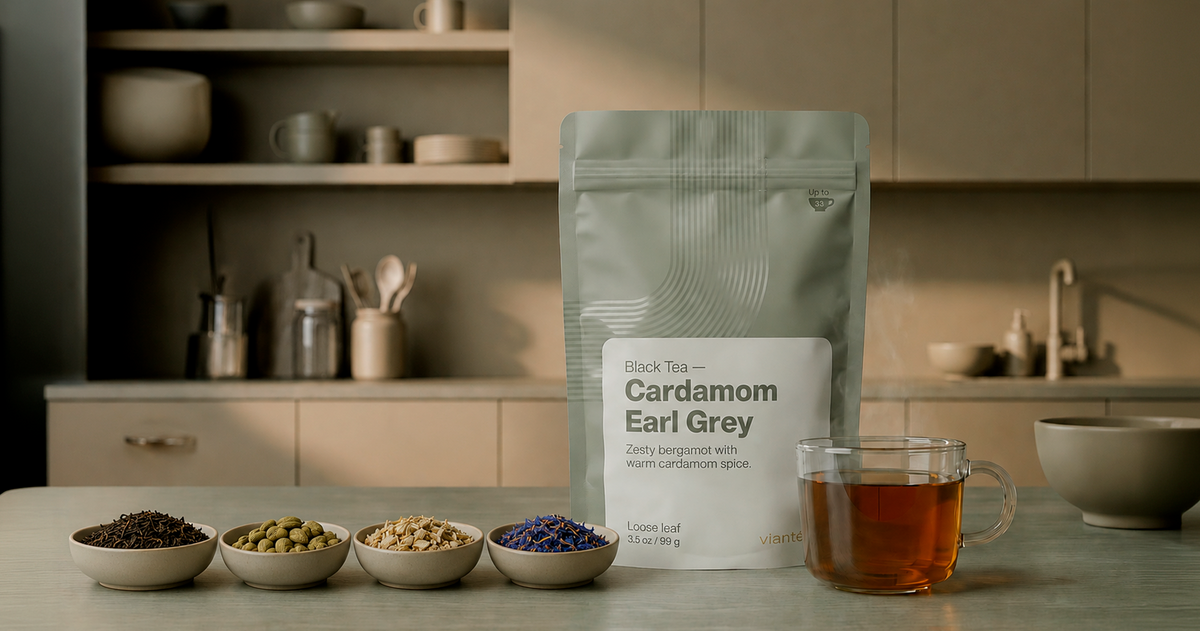
Earl Grey is one of the most recognized teas in the world, and most people who drink it regularly have never thought to ask what's actually in it. The answer is straightforward — and knowing it changes how you brew it.
Quick Answer: Earl Grey is made from black tea flavored with oil of bergamot, a citrus fruit grown primarily in Calabria, southern Italy. The bergamot oil gives it the distinctive floral-citrus aroma and flavor that sets it apart from plain black tea. Some versions add lavender, cornflower petals, or other botanicals. Cardamom Earl Grey — like Vianté's version (https://www.viante.com/collections/tea-blends) — adds warm cardamom to the classic formula, giving it more depth and spice.
What Is Bergamot?
Bergamot (Citrus bergamia) is a small, pear-shaped citrus fruit grown primarily in Calabria, Italy. It's rarely eaten — the fruit is intensely bitter — but the oil extracted from its rind is highly aromatic and widely used in perfumery and tea.
The bergamot used in Earl Grey is either a natural oil cold-pressed from the rind, or a synthetic version designed to replicate it. High-quality Earl Grey uses natural bergamot oil. Lower-quality versions often use artificial flavoring — the difference in aroma is noticeable.
The Base Tea
The black tea base is typically a Ceylon (Sri Lanka) or Chinese black tea, or a blend. The base needs to be assertive enough to hold up to the bergamot. Ceylon is a common choice because of its bright, clean character that complements rather than fights the citrus note.
The quality of the base tea matters as much as the bergamot. A cheap Earl Grey uses low-grade tea dust with synthetic flavoring. A quality Earl Grey starts with whole-leaf or large-cut black tea.
What About Cardamom Earl Grey?
Cardamom is a spice from the ginger family — warm, aromatic, slightly sweet, with a distinctive green-herbal edge. It's widely used in South Asian and Middle Eastern cooking and has a long association with tea in those traditions.
Adding cardamom to Earl Grey changes the character significantly. The citrus-floral bergamot note becomes warmer and more grounded. The spice adds depth and complexity that plain Earl Grey doesn't have. Particularly good in the afternoon — complex enough to be interesting, smooth enough to drink without food.
Vianté's Cardamom Earl Grey (https://www.viante.com/collections/tea-blends) is built around whole or large-cut leaf tea, natural bergamot, and cardamom.
How to Brew Earl Grey
Earl Grey is a black tea — near-boiling water, 200–212°F (93–100°C). Steep for 3–4 minutes. Any longer and the bergamot note starts to turn slightly bitter.
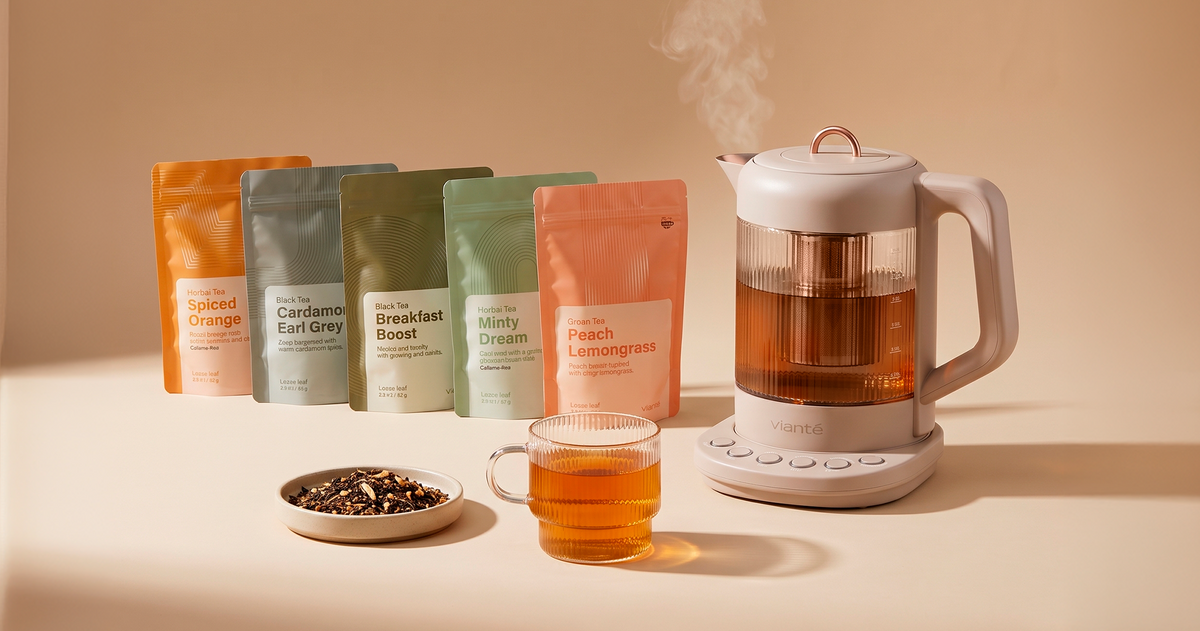
Vianté kettles (https://www.viante.com/collections/digital-kettles) make hitting the right temperature consistent — no waiting for water to cool from a full boil.
Earl Grey works plain, with a small amount of honey, or with milk. With cardamom Earl Grey, milk works particularly well — it rounds out the spice and brings out the warmth.
People Also Ask
Does Earl Grey tea contain bergamot?
Yes. Bergamot oil — extracted from Citrus bergamia — is the defining ingredient. Without bergamot, it's just black tea.
Is Earl Grey tea caffeinated?
Yes. Made from black tea, typically 40–70 mg of caffeine per 8 oz cup. The bergamot flavoring doesn't affect caffeine content.
What does Earl Grey taste like?
Bold black tea base with a floral, citrus bergamot note on top. The scent is often recognizable before the first sip.
What makes Cardamom Earl Grey different from regular Earl Grey?
Cardamom adds warmth and spice to the bergamot-citrus profile. More layered and complex — the cardamom rounds out the floral edge of the bergamot and gives the cup more body.
How should I brew Vianté Cardamom Earl Grey?
Brew at 200–212°F for 3–4 minutes. Use a stainless steel or glass infuser. Drink plain or with a small amount of honey or milk.

Leave a comment
This site is protected by hCaptcha and the hCaptcha Privacy Policy and Terms of Service apply.