

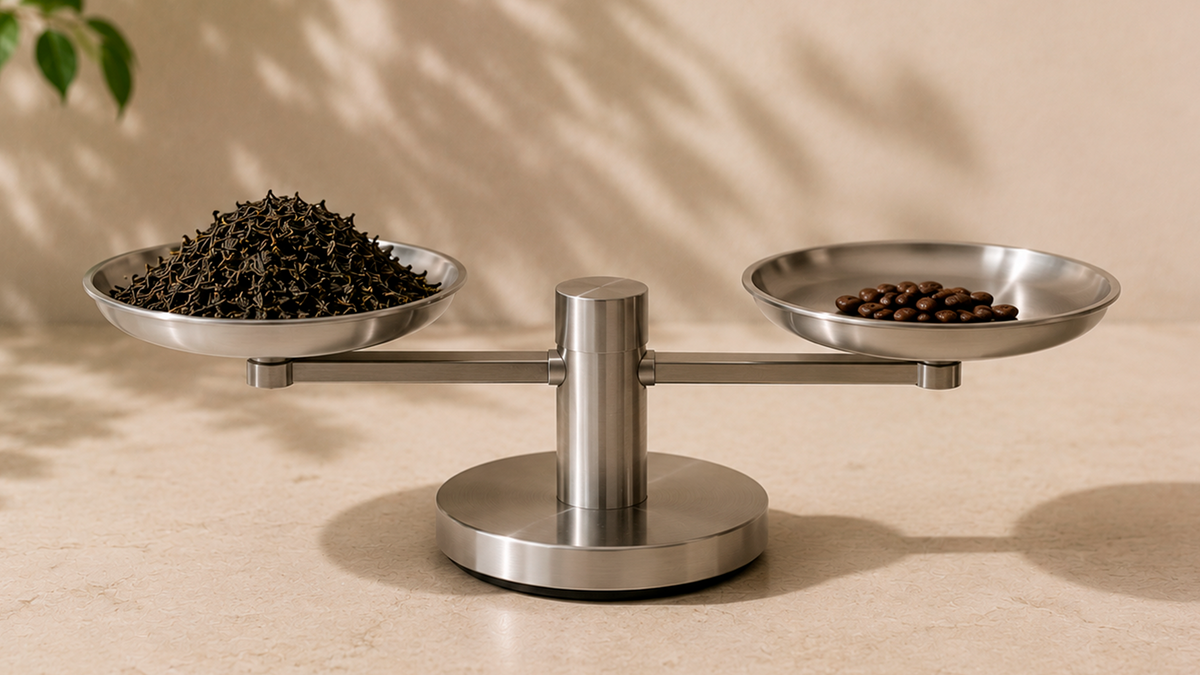
Does Tea Have Caffeine? How Much Is in Each Type
The short answer is yes — most tea has caffeine. The longer answer is that the amount varies more than most people realize, and a few things you might assume contain caffeine don't.
Quick Answer: All true teas — black, green, white, and oolong — come from Camellia sinensis and naturally contain caffeine. The amount differs by type and brew method. Black tea has the most, typically 40–70 mg per cup. Green and white teas have less, usually 20–45 mg. Herbal teas (chamomile, peppermint, rooibos) are naturally caffeine-free because they contain no actual tea leaf. Brew time and temperature also affect how much caffeine ends up in your cup.
Why Does Tea Contain Caffeine?
Caffeine in tea is naturally produced by Camellia sinensis as a defense mechanism against insects. It's concentrated primarily in young leaves and buds, which is why teas made from higher-grade, younger leaves tend to have more caffeine per gram of dry leaf.
Processing affects how caffeine behaves in the cup. Fully oxidized teas (black) extract caffeine more readily. Unoxidized teas (green, white) extract it more slowly — which may explain why they're often described as producing more sustained energy without a sharp spike.
Caffeine Content by Tea Type
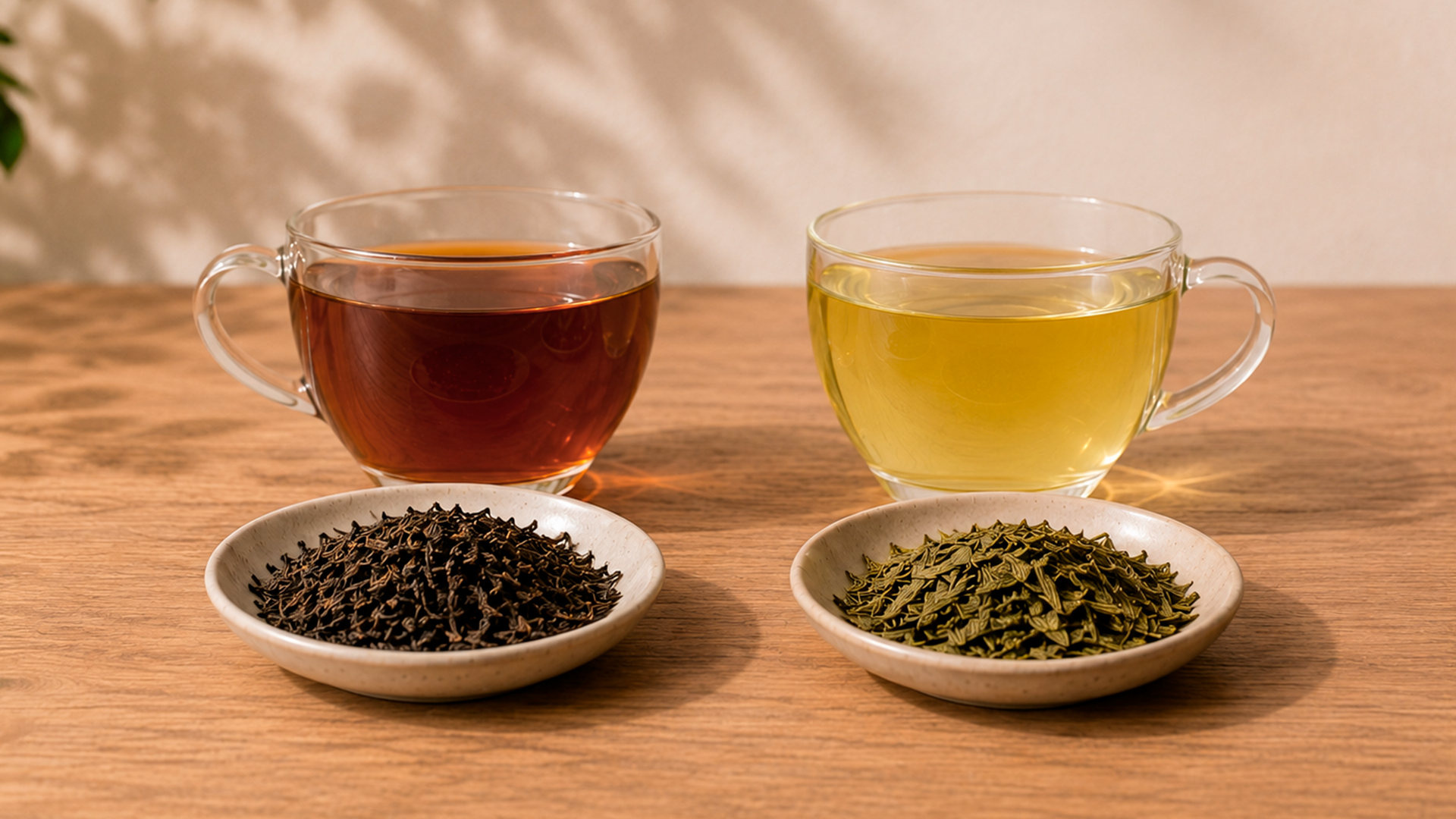
Black Tea — 40 to 70 mg per 8 oz cup
The highest-caffeine true tea. Brewed at near-boiling temperatures, which increases extraction. The base for most breakfast teas and chai blends.
Oolong Tea — 30 to 50 mg per 8 oz cup
Sits between green and black depending on oxidation. Lightly oxidized oolongs are closer to green. Heavily roasted oolongs approach black tea levels.
Green Tea — 20 to 45 mg per 8 oz cup
Meaningful caffeine, but extracted at lower temperatures in a more moderate brew, which moderates the curve.
White Tea — 15 to 30 mg per 8 oz cup
Young buds and leaves with minimal processing. Despite the caffeine-dense young leaf, gentle brewing conditions keep extraction low.
Herbal Teas — 0 mg
Chamomile, peppermint, rooibos, hibiscus — no caffeine. They're not made from Camellia sinensis at all. Naturally and completely caffeine-free.
Spiced Blends — varies
A spiced blend built on black tea leaves will have caffeine (40–70 mg range). A blend built entirely on herbal ingredients will have none. Check the ingredient base.
Does Brewing Method Affect Caffeine?
Yes, in two meaningful ways.
Temperature: Higher temperatures extract caffeine more efficiently. A cup of green tea brewed at 212°F will have more caffeine than the same tea brewed at 160°F.
Steep time: Longer steeping means more caffeine extracted. The first minute pulls a significant portion. If you want less caffeine, shorter steep times help — though they won't eliminate it.
Cold brew tea steeped for 4–12 hours in the refrigerator actually produces a lower-caffeine cup than hot brewing, because cold water extracts caffeine less efficiently.
Is the Caffeine in Tea Different From Coffee?
The caffeine molecule is identical. What differs is context. Tea contains L-theanine, an amino acid that doesn't appear in coffee. L-theanine is associated with a calming effect thought to moderate the stimulant impact of caffeine — which may explain why tea is often described as producing focused alertness without the jitteriness that coffee can cause. This is an active area of scientific study.
People Also Ask
Does green tea have less caffeine than black tea?
Yes. Green tea typically contains 20–45 mg per cup. Black tea runs 40–70 mg. The difference comes from processing and typical brewing conditions.
Is herbal tea caffeine-free?
Yes. Chamomile, peppermint, hibiscus, rooibos — all caffeine-free. They're not made from the tea plant at all.
Can you reduce caffeine in tea by steeping for less time?
Somewhat. Caffeine extraction is front-loaded — a significant portion comes out in the first minute. Shorter steep times reduce it but don't eliminate it.
Does loose leaf tea have more caffeine than tea bags?
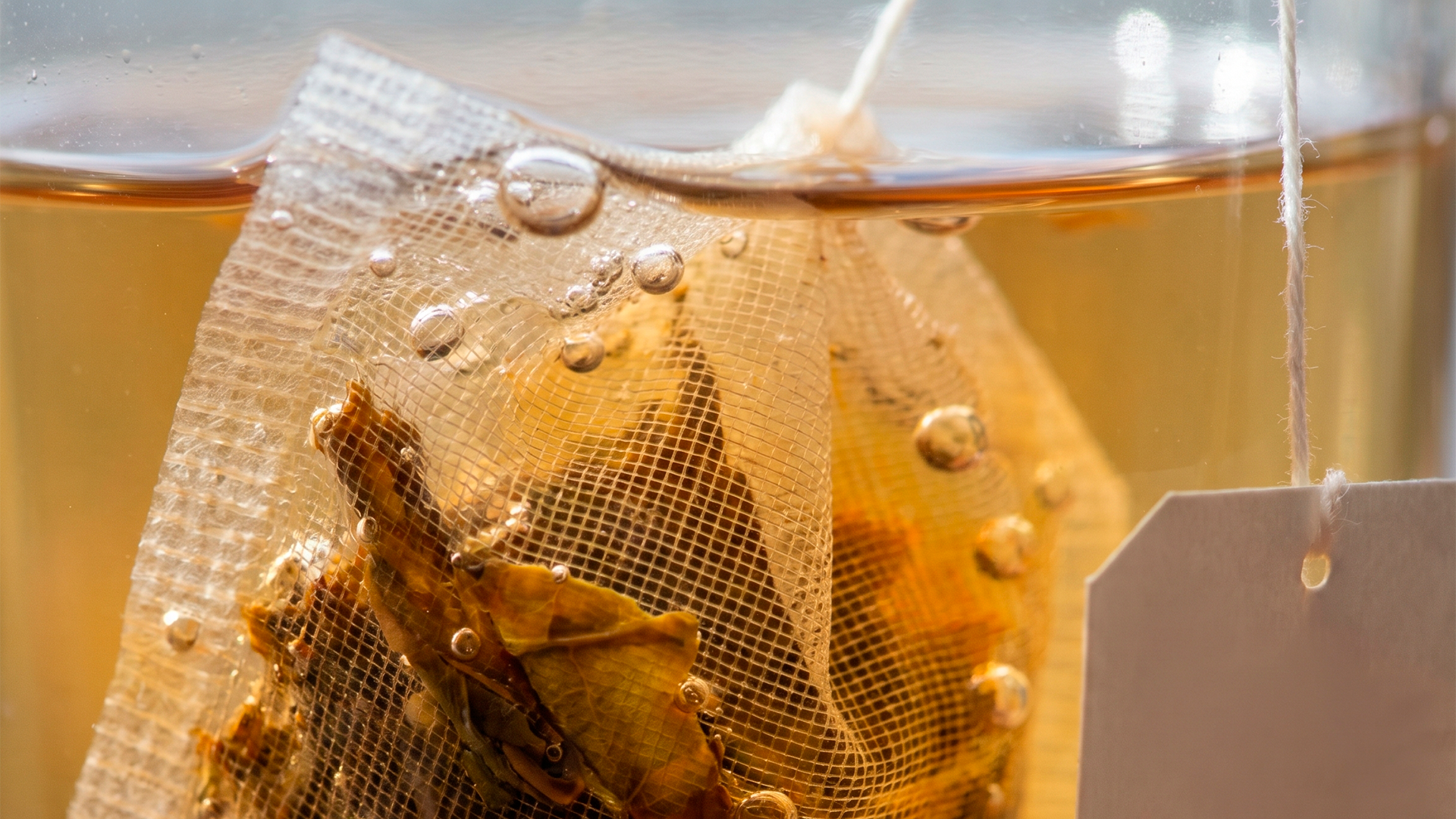
Not inherently. Caffeine depends on the tea itself, not the format. However, tea bags use smaller-particle tea that extracts quickly, which can produce slightly higher caffeine concentration in the same brew time.
Is tea safe to drink every day?
For most people, yes. If you have specific questions about caffeine and your health, a doctor is the right person to ask.

Leave a comment
This site is protected by hCaptcha and the hCaptcha Privacy Policy and Terms of Service apply.